NAVIGATING THE DELUGE OF SCIENTIFIC LITERATURE: AI TOOLS AIM TO ASSIST RESEARCHERS
In the face of an overwhelming volume of scientific papers—almost 3 million published last year alone—scientists are turning to artificial intelligence (AI) tools to streamline literature review processes. These tools, trained on vast amounts of text data, promise to help researchers discover relevant papers and provide summarized insights. However, challenges persist, including false content generation, restricted access to paywalled papers, and the quest for sustainable business models.
One notable AI tool, Elicit, introduced in 2021, is among a growing number designed to aid scientists in literature navigation. Despite its user base of 250,000, Elicit faces criticisms regarding the accuracy of its paper summaries. The proliferation of such platforms underscores the rising importance of AI in scientific research.
These AI tools, akin to ChatGPT and other large language models, leverage generative systems trained on diverse text samples. This enables them to not only summarize search results but also identify relevant content based on context within papers, offering a more nuanced approach than traditional keyword searches.
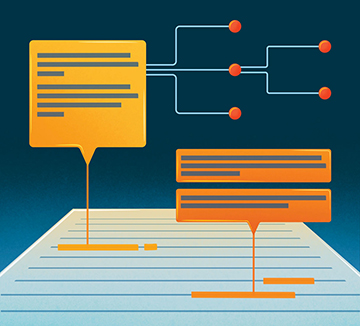
While some tools focus on summarization, others, like Scim, help readers pinpoint a paper's most relevant sections. Semantic Reader, developed by the Allen Institute for AI, incorporates an automated ink highlighter feature, allowing users to customize highlights for different themes within a paper.
However, challenges persist, such as the risk of AI systems generating false content. The Allen Institute addresses this by operating Semantic Reader with a suite of language models, including those trained on scientific papers. Yet, assessing the effectiveness of such approaches remains a complex task.
Access to full-text papers also poses a hurdle, with many AI tools currently limited to abstracts. Even major publishers like Elsevier restrict their AI tools to abstracts, citing licensing agreements. The Allen Institute has taken a different approach, securing agreements with over 50 publishers to mine the full text of paywalled papers.
Efforts to enable broad-scale data mining require greater adoption of machine-readable formats, a directive supported by a 2022 White House initiative. However, negotiations for such access can be time-consuming, creating disparities among organizations.
Looking ahead, computer scientists aim to develop more sophisticated AIs capable of extracting richer information from scientific literature. These advancements could significantly impact fields like drug discovery and systematic reviews. Despite the promises, researchers using AI tools are advised to exercise caution and verify outputs due to the current limitations of these systems.